
INCIDENT AND NEAR-MISS INVESTIGATIONS HELP US LEARN

SherlockWhen a patient safety incident or a near miss occurs and is reported, decisions are made about what to do following the event and how to determine the level of investigation, if any, the event will require. Incident investigations can entail anything from a review of the record to conducting a full Root-Cause-Analysis (RCA) process.

An RCA provides a detailed review of the facts as they appear in the record, and includes interviews with individuals involved in the event — as well as managers and peers — to capture their recollections and recommendations. Additionally, the RCA process evaluates the role that the system played in the event.

The RCA asks critical questions such as:

  1. Did policies, procedures, and processes exist?
  2. If so, were they followed?
  3. Were they relevant and appropriate to the event?
  4. Were the appropriate resources available?

In some cases, the RCA is satisfied with a detailed investigation, but other times a face-to-face meeting with a comprehensive review is needed. The comprehensive review is particularly important when an incident involves many areas of care, providers, and/or clinical or operational departments. Meetings should happen as quickly as possible so the facts are still fresh in the minds of those involved in the RCA, 72 hours is preferred.

Scheduling an RCA meeting is a major administrative commitment that consumes valuable resources, but like every other tool or therapy in health care, we want to ensure that it happens when it is necessary and likely to bring value.

The decision to convene a face to face meeting typically involves the personnel of the institutions safety leadership that many times comprise of a Patient Safety Officer, Nursing Leadership and Physician Leadership.

The advantages of the well-done RCA are numerous.

They can uncover causalities of the event that are not obvious.

Nearly every patient safety incident has multiple root causes. An RCA allows deeper understanding of the situation and helps identify the multifactorial set of circumstances that contributed to the occurrence. Think of the James Reason Swiss Cheese model and apply it to patient safety. How many layers of the cheese had to line up to allow harm to reach the patient? The RCA helps to identify and correct the different processes that contributed to the error.

Sometimes, the cause of harm seems obvious and it is tempting to shortcut the investigation. This usually happens when the cause is determined to be related to individual competence. Caution is advised in these situations. Supervisors and leaders should not automatically assume an individual is the cause of the error, because it prevents us from investigating and identifying other aspects of the system (or additional causes) that could be contributing to error. The lack of examining process may leave the system, our patients, and care providers vulnerable to making a similar mistake and prevents us from learning.

They demonstrate to staff that there is great effort put into understanding and analyzing how the work environment can contribute to mistakes.

Presuming human error as the obvious cause of incident has other negative consequences. Maintaining a healthy safety culture is especially challenging when team members feel that mistakes are held against them. This perception of punishment prevents staff from feeling that they work in a just culture, a culture that enables learning and recovery, and recognizes process failures. 

Investigations can identify learning for the entire organization.

We need to create learning opportunities from patient safety incidents and near-misses. A detailed non-biased investigation will often uncover system issues that transcend a particular set of circumstances, clinical, or business unit. Lessons learned can be communicated to help increase the safety of patients throughout a given hospital, and ultimately, across the entire system. But a high level of learning is impossible without a search for the contributing factors.

Remember: If you are part of the decision-making team that is following up on a patient safety event or near-miss, consider the benefits of a well-conducted post-incident review to identify the root causes.

For an organization to develop system understanding and create a learning environment, the underlying causes need to be discovered and have the findings disseminated to prevent the same or similar events in the future.
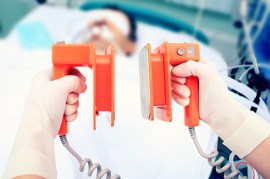
Evaluating Inpatient Crisis Response

shutterstock_168180668_aAs the Medical Director of patient safety for a large healthcare system I can say that conducting unannounced “mock codes” (Inpatient Crisis Response Evaluation System is the title of our program) is a critical pillar of safety quality improvement efforts. WISER oversees our program and provides the evaluation and consultation service to many of our 20 hospitals in conjunction with and close collaboration with the local hospital physician and nursing leadership.

The unannounced part allows true system evaluation of such a response. The events are closely choreographed with our simulation team (led by a physician medical director), as well as the local hospital leadership. Our evaluation system has afforded us as a system, the opportunity to unveil many latent system threats as well as identify opportunities for targeted training efforts. With regard to simulation and training it is a TRUE needs analysis in this way.

With regard to acceptance, I believe that it is related to the maturity of the overall organization and the simulation personnel conducting the events. In the words of James Reason on high reliability organizations “They anticipate the worst and equip themselves to deal with it at all levels of the organization. It is hard, even unnatural, for individuals to remain chronically uneasy, so their organizational culture takes on a profound significance. Individuals may forget to be afraid, but the culture of a high reliability organization provides them with both the reminders and the tools to help them remember.” Thus I believe in highly mature safety culture organizations it is incumbent upon both the leadership and the healthcare clinicians to be accepting of “external” evaluations for such critical moments as inpatient crisis events.

I also believe that the naming of the program has significant implications. The title “Mock Code” in my opinion sounds somewhat trivial, extra, perhaps of marginal utility, or at the very least “fake.” If that is the intent, then I believe that is easier to argue that the events should be pre-planned and/or avoid being completely “unexpected”. However if the intent is to seriously evaluate a high reliability organization’s response to an unexpected patient situation, and identify needs, process improvement opportunities and uncover latent threats, I would argue for the unannounced methodology.

Our health system shares a deep commitment to continue on the journey to high reliability and believe our Inpatient Crisis Response Evaluation System is an important component of our success. As WISER is accredited by the SSH in Systems Integration (among other categories) we believe a fully integrated approach is necessary, very safe, feasible and our responsibility to execute and provide feedback to our health system.shutterstock_78054850_a

As anyone who provides actual care for patients there are risks and benefits to ALL decision that are made from therapeutics, to staffing, to salting the parking lot. There are certainly safety items that must be attended to in any of our simulation efforts, particularly those which occur in proximity to actual care. However carefully crafted programs, process and execution will ultimately ensure the benefits outweigh the risks.

I truly believe the undiscovered system latent threats to inpatients are a greater risk than the conducting of the mock code itself.

A Just Culture: A Cornerstone of Patient Safety

A Just Culture in a health care setting is one of the cornerstones of the overall culture of safety at a given institution. It exists when the staff understands that they are part of an organization that recognizes several important tenets of the work environment related to patient safety.

Those tenets include recognition that humans and systems are fallible and that errors and near misses occur. When they do, the humans in the system are treated fairly. Additionally, care providers need to know that the system hears their voice of concern and has a true desire to learn from such events.

The establishment of A Just Culture is part of a cultural transformation that allows an organization to move from a punitive response to errors to one in which health care professionals are expected to speak up and report potentially unsafe conditions. Such an environment allows health care providers to speak more freely about errors and to help create a safer environment for the future.

A Just Culture does not free individuals of personal accountability. Health care professionals make hundreds if not thousands of decisions on a regular basis that affect the patient care. They’re expected to make these decisions in accordance with their professional training, protocols, guidelines, and known best practices. A Just Culture should give people the confidence that when errors do occur, however serious, those involved will be treated fairly and equitably.

Organizations like ours with a high-functioning belief of the existence of A Just Culture understand the complexity of health care decision making. We recognize that many times health care professionals are making decisions based on professional judgment and situational awareness as well as the real-time interactions and needs of the patients within available resources. From the start, A Just Culture assumes that individual health care professionals have a desire to deliver the best care within their purview.

For decades in health care, errors and/or near miss occurrences invoked a punitive-orientated focus to investigations that largely sought to assign blame to the individual health care providers involved in the event. Many times, investigations are conducted with a mission of finding someone to blame instead of looking for the true cause(s) of the event. Investigations and remedies that focus on a punitive, pervasive thought process will also tend to fail to assess responsibilities and causes attributable to the system providing the infrastructure for the health care providers.

The end result is one that creates an environment of mistrust in and amongst groups of professionals or teams that provide patient care daily. This perpetuates a “shame and blame” response to the errors. In such circumstances, it is not hard to understand the natural response to push the responsibility or blame to others involved in the incident. This creates a natural barrier to productive inter- and intra-professional dialog about the incident and inputs bias into the final report that attempt to deflect blame. Thus, it decreases the ability to be able to rely on, or learn from, information obtained in terms of attempting to create solutions or interventions that would likely reduce the chance of a similar occurrence in the future.

Investigations in a high functioning organization embracing A Just Culture will look for causes of incidents beyond the focus on an individual and seek to identify the many elements of system breakdown that often accompany errors and mistakes. Those of us working in patient safety truly understand to be able to improve systems to a level that would proactively prevent an error from occurring.

The foundation of culture is people. How people interact within a community is partly based on custom, tradition, trust, mutual respect, and some vision of purpose. A Just Culture is a journey that requires attention to all of these factors regarding professionals in community. In healthcare leaders must develop a strong commitment to maintain the principles of A Just Culture from the most senior leadership down to the individual providers who perform patient care on the front-line.

Developing a Mature Safety Culture Within Healthcare: The Road to High Reliability

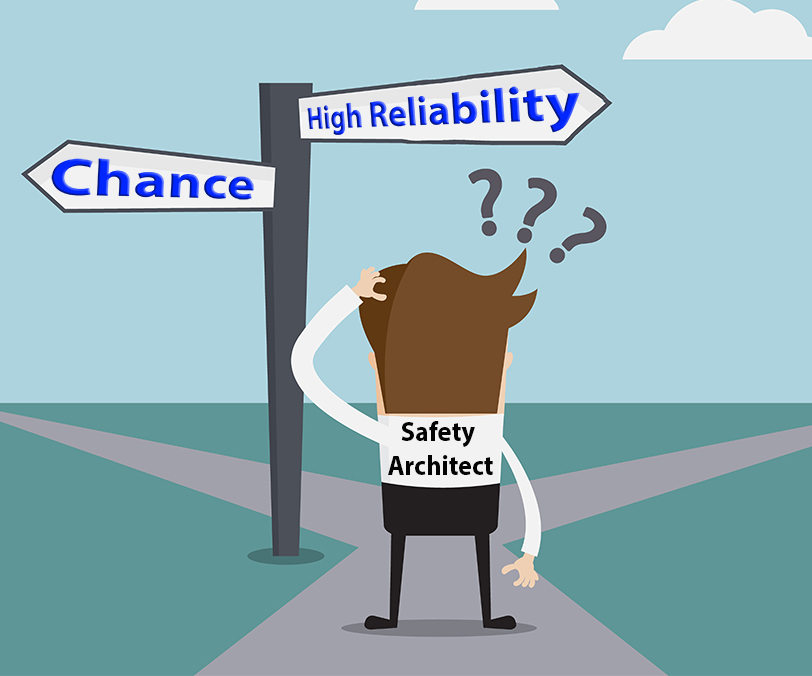
CrossroadsofSafety copyWith regards to patient safety, few things are more important than an organization having a mature safety culture. Such a culture is a culmination of the people, policies, procedures, and attitudes of each and every employee and their individual commitment and engagement in keeping patients safe from preventable harm.

Outside of health care, the safety culture in high-risk industries such as aviation, nuclear power, and naval operations, for example, is known to be very mature. As we work to build mature models of safety culture in health care, it is useful to borrow from some of the tenets, research, and best practices that are known to positively influence culture in the previously mentioned high-risk, but high reliability, organizations. In this instance, high reliability refers to organizations that are successful in avoiding catastrophes in an environment where normal accidents are expected due to risk factors and complexity.

Through the work of James Reason who popularized the Swiss cheese model of safety, we know that high reliability organizations use a number of common approaches in dealing with safety. One approach is recognizing that humans are fallible and will likely make mistakes at some point. Recognizing that system design is often the cause behind error as opposed to the individual(s) involved is another important approach. High reliability organizations maintain an active preoccupation with safety. There is anticipation that something will likely go wrong. This conditions people in the organization to intervene in order to avoid failure.

Most errors that bring harm to patients occur because of lapses in systems designed around caregivers delivering patient care. A smaller subset of errors occurs because of human mistakes. These occur because of the innate fallibility of people who function in complex, high-intensity environments. Often times, errors occur because of a lack of awareness of the potential for error.

One of the most powerful drivers of a safety culture exists in true leadership buy-in to the importance of safety. From the board of directors to senior executives to frontline managers, there must be a consistent, top-down prioritization of safety – an embedding of safety principles throughout the organizational fabric. This prioritization should recognize and acknowledge the importance of safety concerns and potential harm that can happen and that is experienced by patients in multiple ways. Through this top-down approach, there will be a bottom-up enthusiasm and engagement of frontline staff to partner in the elimination of errors.

Safety concerns exist at the local level in their own unique way as well as in all areas within a complex organization. Potential sources of harm exist not only in the high-risk, high-intensity, complex areas of medicine such as the cardiothoracic intensive care unit but also in the seemingly routine well child clinic in an outpatient setting.

A proactive organization develops ways to inspire all who participate in and around patient care to be aware of the potential for error. In doing so, they help maintain a healthy vigilance at all levels to ensure harm does not reach patients. When one considers the complexity of modern health care delivery systems, it is easy to recognize that bringing an organization to this level is no small feat. It is even harder to keep an organization at that level once it is achieved. It requires continual and active management to avoid complacency.

Building a safety culture begins with you (i.e., someone who would be reading a blog post on safety)! Whether you consider yourself a leader, manager, or frontline care provider, you can have a net influence within the work environment culture of safety. Practicing by example, sharing experiences, data, and stories to remind people that errors do in fact occur, encouraging and rewarding reporting of near misses and errors, as well as ensuring that all involved in errors are dealt with fairly, will help promote a higher safety culture. Along with this, it is important to continue to empower frontline staff and engage them in solutions relevant to patient safety. That will increase the likelihood of developing and implementing effective solutions.

While today’s care delivery environment feels stretched thin, more chaotic, and often more complex than ever, we have an amazingly dedicated global healthcare workforce carrying out the hard work of caring for people in both routine and critical situations. Dedicated staff members in professional and non-professional roles working together as teams to provide patient care make up a large part of the workforce. An intense desire to not only work hard but also to improve upon their capabilities and learning is innate to people who choose to care for patients. They seek to ensure that they do the best job possible in taking care of patients. Leveraging this set of traits by the patient safety leaders at each local site is important to carrying out the mission.

Helping local organizations learn from errors and near misses allows for continual system improvement. Such improvement provides a better environment in which care providers can minimize opportunities for error. Both are key components of high reliability organizations.

By implementing and maintaining active adoption of some of the principles described above, we will enhance our safety culture and move in the direction of high reliability.